
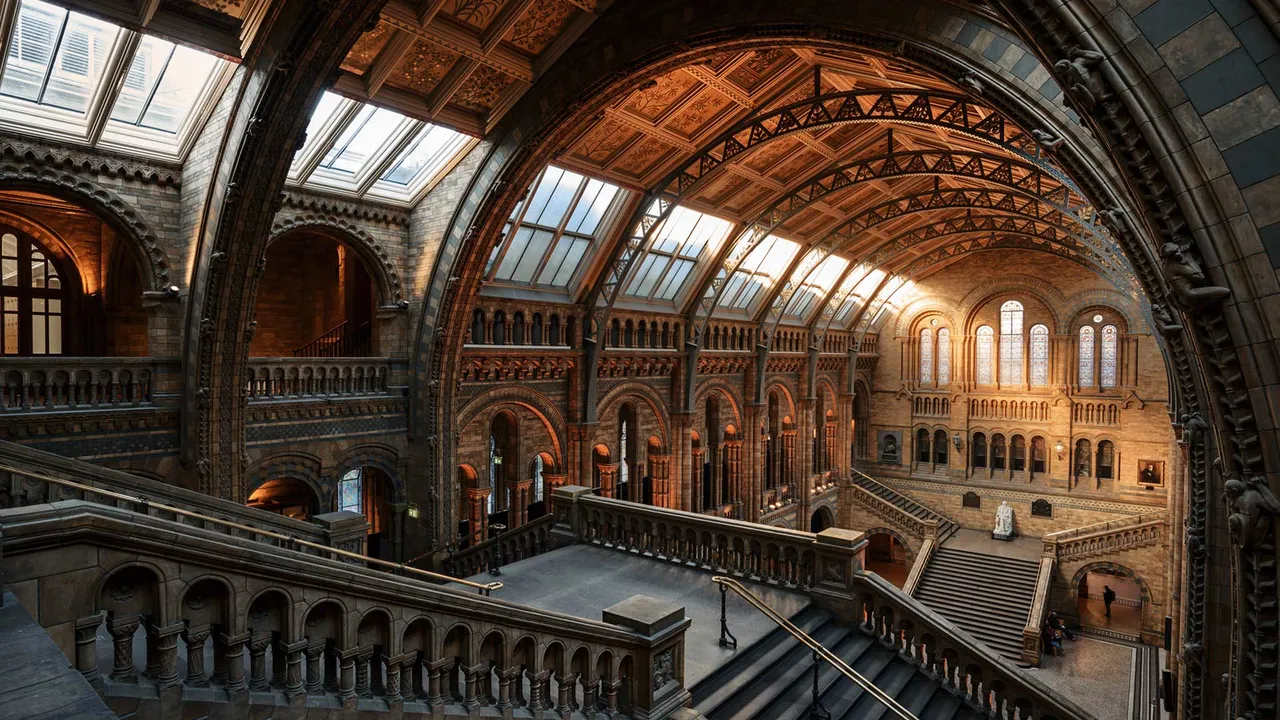
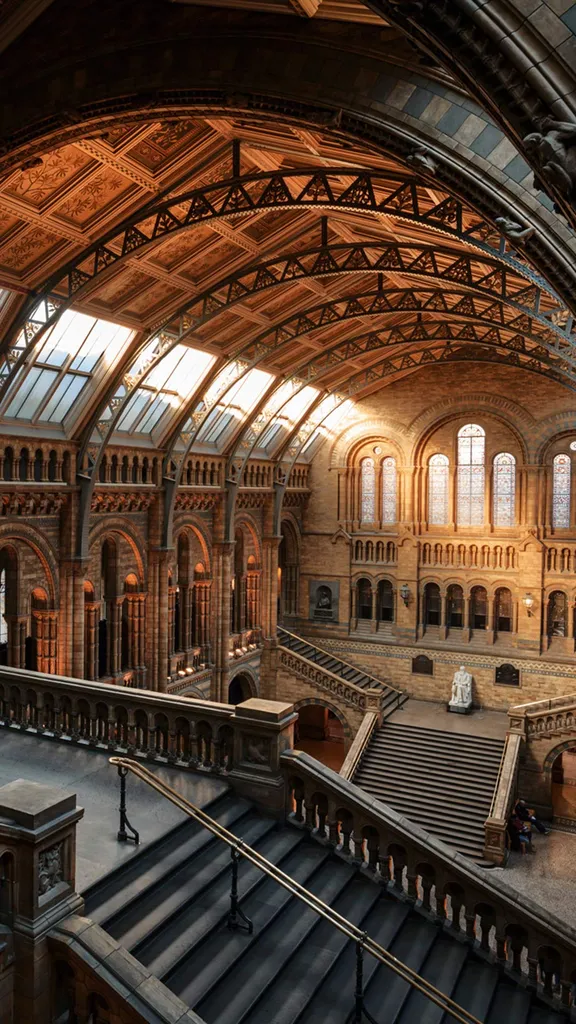
Natural History Museum, London, England (© Colm Keating/Tandem Stills + Motion)
You walk into a museum, and suddenly time shifts. A fossil hints at life millions of years ago. A gemstone reflects geological change you can't see. That sense of connection is exactly what International Museum Day, created in 1977 by the International Council of Museums, aims to celebrate.
At the Natural History Museum in London, which opened in 1881, those moments come quickly. Built in Romanesque Revival style, the building reflects natural forms in its design, while four colour-coded zones organise the galleries by theme. Today, it houses over 80 million specimens, spanning botany, zoology, mineralogy and palaeontology. The museum's dinosaur gallery and the massive blue whale skeleton named Hope, suspended in Hintze Hall, are among its most recognised displays.
What draws people in—curiosity or nostalgia? Museums turn abstract ideas into real objects you can see and question. From science documentaries to films like 'Night at the Museum,' they remind us that exploration doesn't end in textbooks—it starts when you walk through the door.

