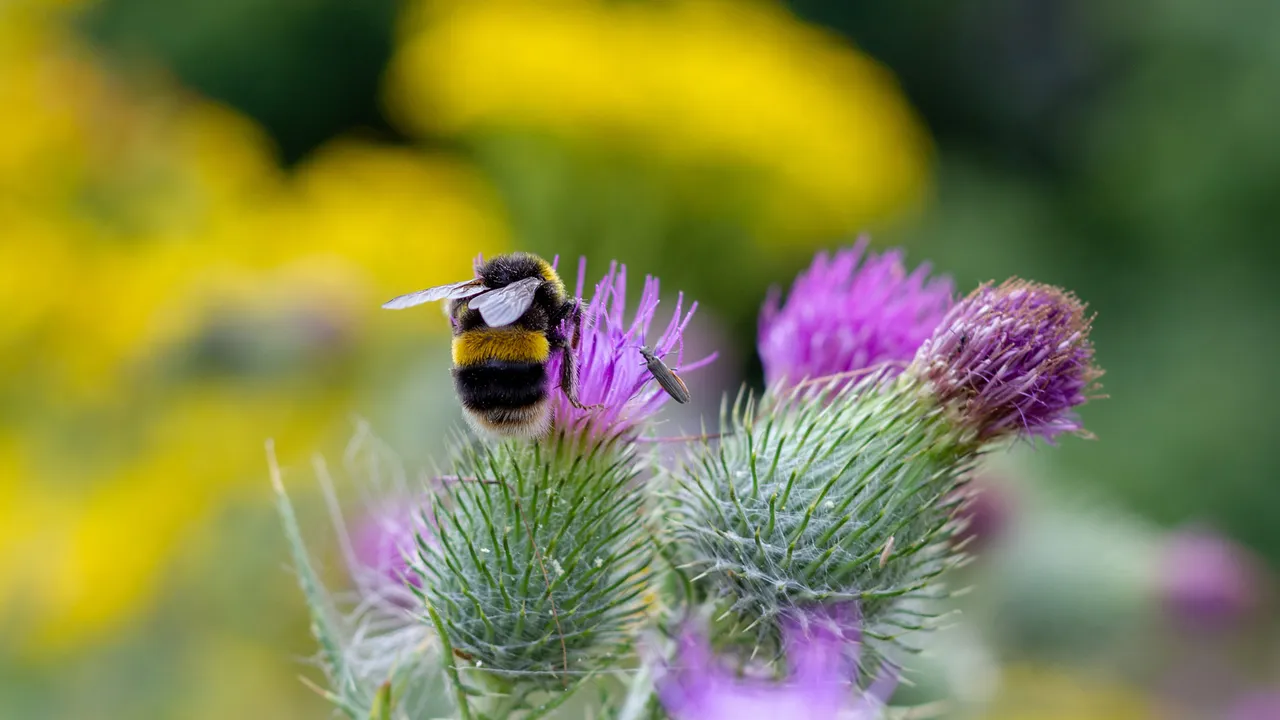
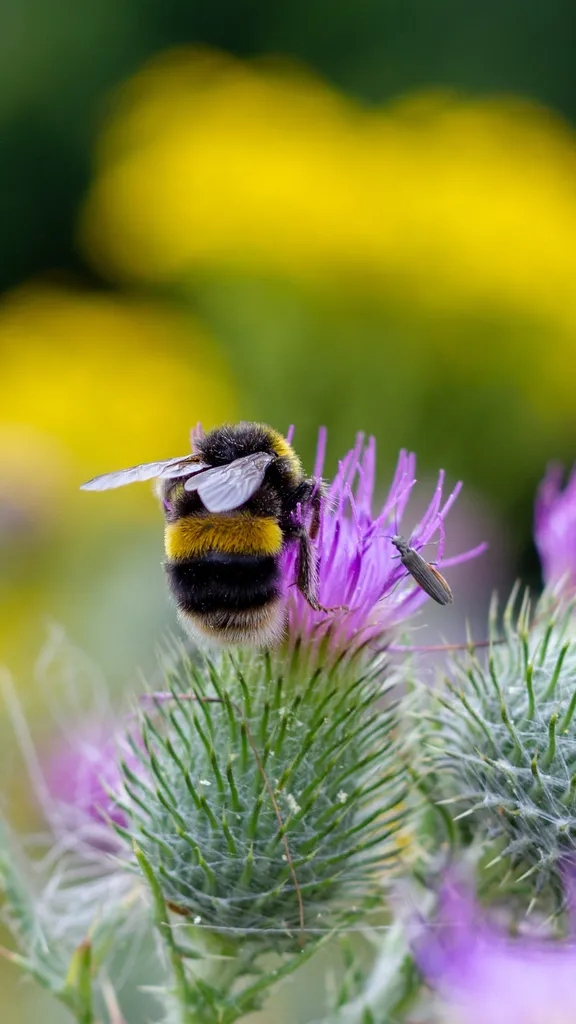
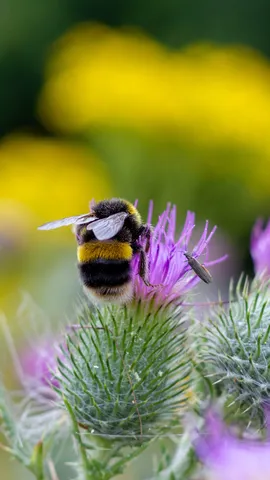
Bumble bee pollinating, Worcester, England
A soft buzz and a dusting of pollen can shape the future of our food. Today's image features the bumble bee during its quiet yet essential work. Unlike many insects, bumble bees use 'buzz pollination,' vibrating their flight muscles to shake pollen from flowers—a method vital for crops such as tomatoes, peppers and blueberries. Bees and other pollinators contribute to more than 75% of the world's major food crops, improving both yield and quality.
With over 250 known species worldwide, bumble bees are among the most effective native pollinators in cooler climates, where their larger bodies and rapid wingbeats allow them to forage in lower temperatures than honeybees. They live in small, seasonal colonies, often nesting in abandoned burrows or dense grass, with a single queen founding each new nest in spring. Unlike honeybees, they can sting more than once, though they rarely do unless disturbed.
Each flower visit, like this one, supports biodiversity and helps keep food systems resilient, one vibration at a time.